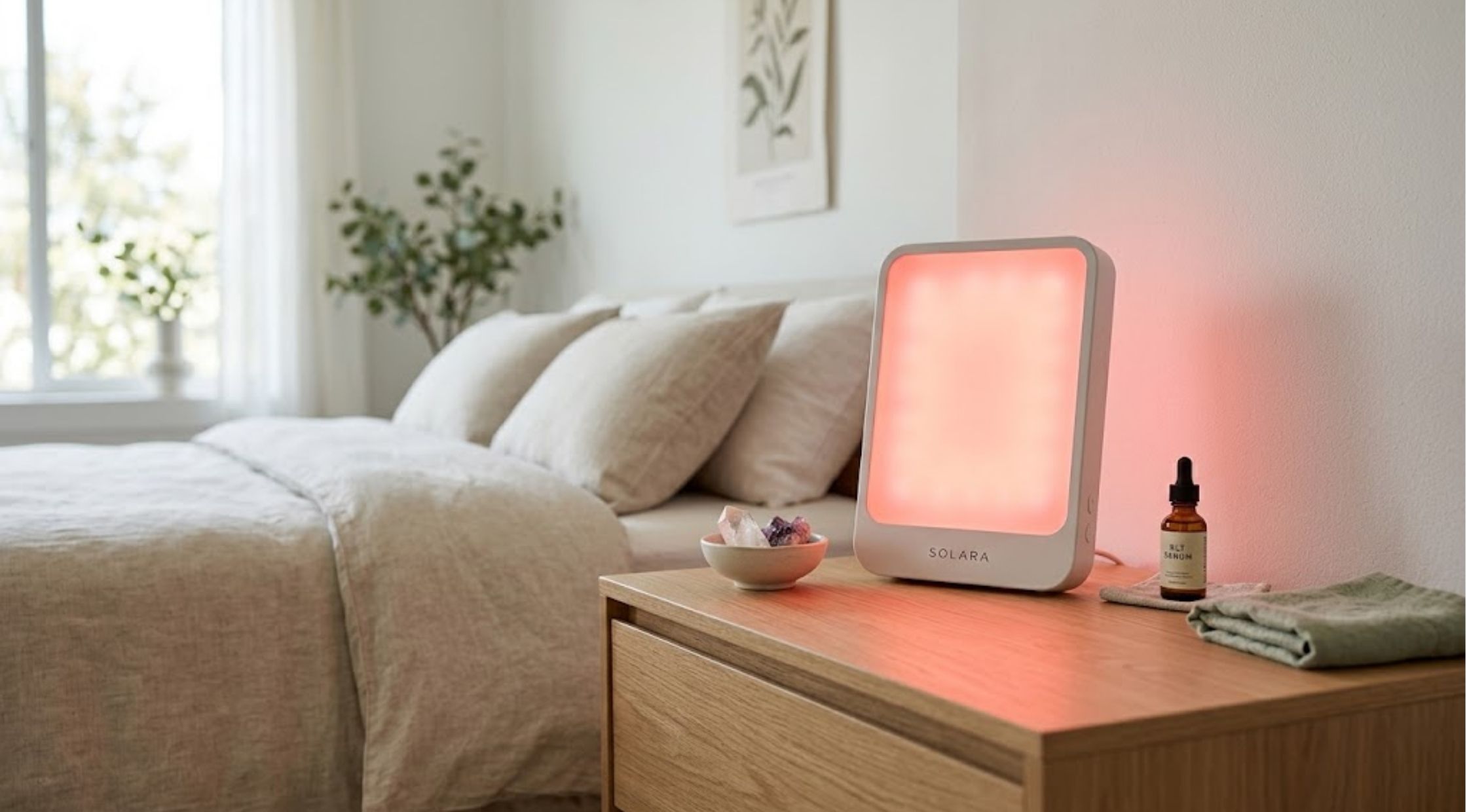
Thinking about Red Light Therapy at Home sounds simple until you start comparing devices.
One panel has dozens of LEDs. Another uses COB technology. Some advertise multiple wavelengths, while others focus on portability or more extensive coverage. Then there are questions about irradiance, treatment distance, session length, and eye protection.
It's easy to spend more money than necessary or buy a device that doesn't actually fit the way you plan to use it.
The smarter approach is to focus on what you need first and the technology second. Here's how to choose a Red Light Therapy Device without getting lost in the specifications.
Why Choosing a Red Light Therapy Device Can Be Confusing
The growing popularity of Red Light Therapy at Home has created a huge range of products.
Some devices are compact enough for targeted use, while others are designed to cover large areas of the body. There are also substantial differences in construction, wavelength combinations, output, and recommended treatment distances.
More LEDs Don't Automatically Mean Better
It's tempting to assume that a device with more LEDs must be more powerful or effective.
But LED quantity alone doesn't tell you how much light actually reaches the area you're treating. Irradiance, measured in mW/cm², is another important specification because output changes with distance.
This is why comparing devices based solely on wattage or LED count can be misleading.
A Device Can Also Be Too Much for Your Routine
A huge panel may look impressive, but it may not be the best choice if you only want targeted sessions.
Likewise, a small portable device may become frustrating if you're trying to treat larger areas.
The right Red Light Therapy Device should match your intended use, available space, and willingness to use it consistently.
Understanding the Important Specifications
You don't need to become an optics expert before buying a light therapy device. However, understanding a few basic specifications can make comparison much easier.
Wavelengths
Red and near-infrared light are commonly used in photobiomodulation research, but different wavelengths interact with tissue differently.
EMR-TEK currently lists red wavelengths in the 630–670nm range and near-infrared wavelengths in the 810–850nm range across its red-light product line.
Rather than choosing a device simply because it has "more wavelengths," look at which wavelengths are actually provided and what the manufacturer recommends the device for.
Irradiance
Irradiance describes the amount of optical power reaching a particular area.
Distance matters considerably. EMR-TEK says an independent Light Labs International measurement of its 200W COB reference light found 138.39 mW/cm² at 6 inches and 67.22 mW/cm² at 12 inches. These are laboratory measurements of specific hardware, not a recommendation for how much exposure any individual should receive.
The important lesson for buyers is simple: always consider output together with treatment distance.
How to Make Red Light Therapy at Home More Practical
Buying the hardware is only the beginning. Your routine needs to be realistic.
Choose the Right Coverage
For a small target area, a compact device may be easier to position.
For larger areas, a larger panel can reduce the amount of repositioning required. EMR-TEK's range includes compact products such as the Firewave as well as larger systems such as the Firedragon and Inferno.
Think about where you intend to use the device before purchasing it.
Check the Recommended Distance
Never assume that sitting closer automatically produces better results.
Follow the manufacturer's instructions for distance and session duration. For example, EMR-TEK's Firewave instructions recommend starting with shorter sessions and increasing duration gradually, while specifying different positioning for facial use.
Make Safety Part of the Routine
A quality Red Light Therapy Device should come with clear operating instructions.
For example, EMR-TEK's Firewave safety guidance says to use the included eye protection, avoid direct skin contact with the device because it can become hot, and never use the device while sleeping.
If you have a medical condition, take photosensitizing medication, are pregnant, or have another reason to be concerned about light exposure, discuss home light therapy with an appropriate healthcare professional before use.
When Is a Premium Device Worth Considering?
A premium device makes more sense when its specifications solve a problem you actually have.
If you want broader coverage, for example, investing in a larger panel may be more practical than repeatedly moving a small device.
If you're particularly interested in measurable specifications, EMR-TEK takes a data-focused approach. The company publishes wavelength information and says some of its devices have been independently measured by Light Labs International.
Its Firewave, for instance, combines a 200W COB module with additional LEDs and offers 630nm, 670nm, and 830nm wavelengths.
For broader applications, the Firedragon offers multiple red and near-infrared wavelengths in a larger format.
The point isn't that everyone needs a high-powered panel. It's that your investment should reflect the type of Red Light Therapy at Home you realistically plan to do.
Benefits of Choosing the Right Setup
A well-matched Red Light Therapy Device can make a home routine easier to maintain.
You may benefit from:
- More appropriate treatment coverage
- Less time repositioning equipment
- Clearer understanding of your device's specifications
- A setup that fits your available space
- Easier integration into an existing wellness routine
- Greater confidence about how to operate the equipment
EMR-TEK also publishes instructions and specifications for its different device formats, which can be useful when comparing compact and larger systems.
Ultimately, convenience matters. A device that sits unused because it's difficult to position isn't providing much practical value.
Build a Routine You Can Actually Maintain
The best approach to Red Light Therapy at Home is to start with realistic expectations.
Identify your main purpose, determine how much coverage you need, compare wavelengths and irradiance, check the recommended treatment distance, and make sure the device's size fits your space.
Don't choose based on a single number or marketing phrase.
A Red Light Therapy Device should be something you understand, can operate safely, and can realistically incorporate into your routine. EMR-TEK is one option for shoppers who want detailed specifications and a range of device sizes, from compact lights to larger panels.
Take your time, compare the actual specifications, and choose the setup that fits your goals rather than simply choosing the biggest or most powerful-looking device.