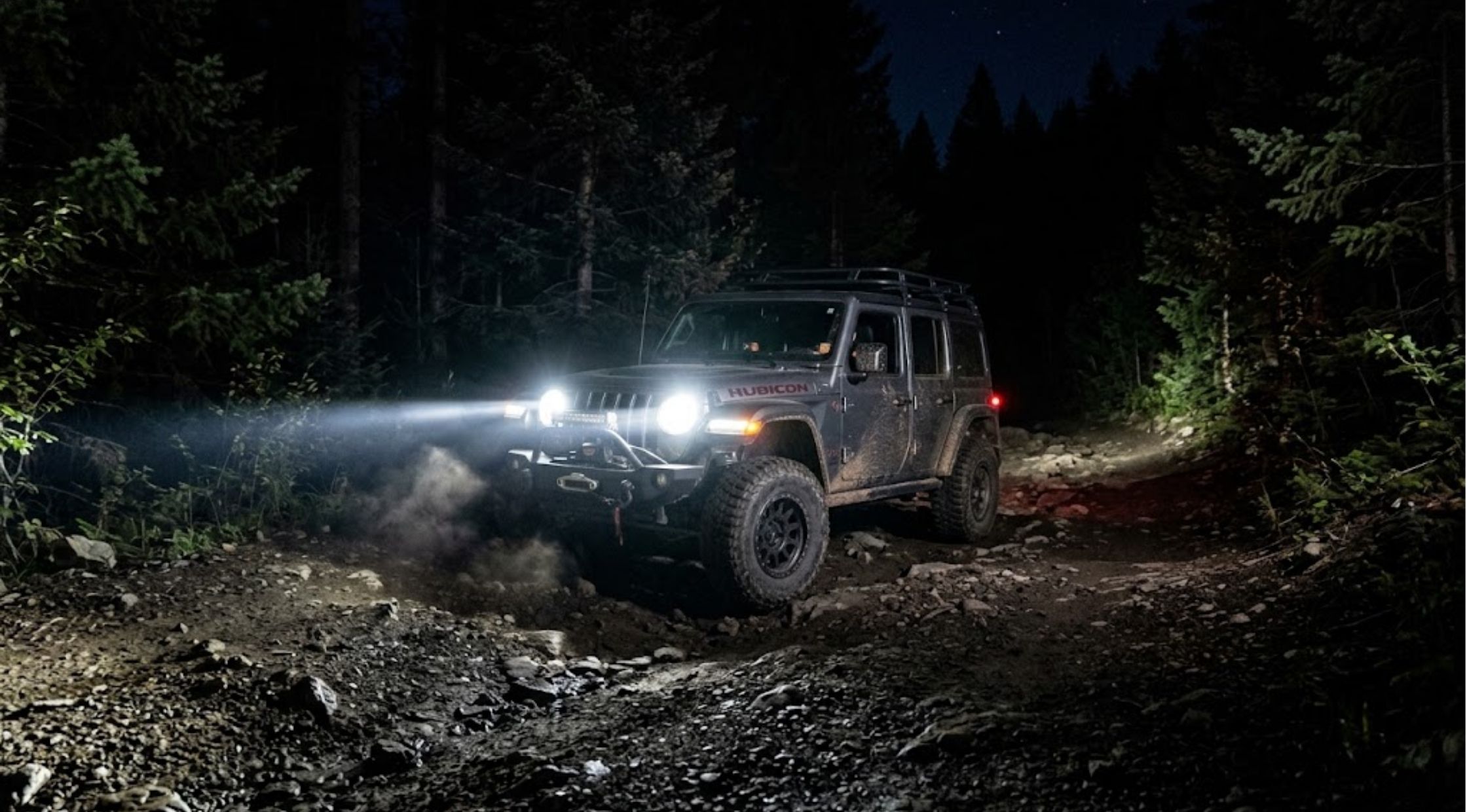
Driving a Jeep after dark should feel confident, not stressful. Yet many owners eventually notice the same problem: the factory headlights simply don't provide the visibility they want, especially on poorly lit roads, trails, or during bad weather.
Upgrading sounds easy until you start comparing products. There are different sizes, beam patterns, brightness levels, color temperatures, housings, wiring systems, and fitments. Some lights prioritize a classic appearance, while others add modern DRLs, halos, or RGB features.
So, how do you choose the right Jeep LED Headlight without spending money on an upgrade that doesn't actually suit your Jeep?
The key is to look beyond brightness alone. Fitment, beam control, durability, installation, and your actual driving conditions all matter.
Why Are Stock Jeep Headlights Sometimes Not Enough?
Factory lighting is designed to meet general requirements, but Jeep owners often use their vehicles in very different environments.
You might commute through city streets during the week and drive unlit country roads on weekends. Or perhaps your Wrangler spends more time on trails where visibility around the vehicle matters just as much as seeing directly ahead.
Older halogen systems can also feel noticeably different from modern LED technology. Light output, beam clarity, energy consumption, and styling can all influence how the vehicle feels at night.
But simply choosing the brightest light available isn't necessarily the solution.
A poorly aimed or badly designed headlight can create glare for other road users while failing to illuminate the road effectively.
Common Problems to Look Out For
Poor Visibility at Night
If your headlights leave dark areas ahead or don't illuminate enough of the road, nighttime driving can become tiring.
The problem isn't always the number of lumens. Beam distribution and aiming are just as important.
Flickering or Electrical Issues
Some aftermarket LED installations can experience flickering, radio interference, or compatibility issues if the electronics aren't designed properly.
That's why integrated anti-flicker systems and vehicle-specific compatibility are worth checking before you buy.
Moisture and Weather Exposure
A Jeep is often exposed to conditions that ordinary commuter vehicles may avoid—mud, rain, dust, snow, vibration, and off-road debris.
A headlight designed with weather resistance and appropriate housing materials can be a more sensible choice for this type of use.
Wrong Fitment
This is one of the biggest purchasing mistakes.
A product may be advertised as a Jeep headlight but still be designed for a specific generation or model. JK, JL, JLU, 4xe, Gladiator, TJ, and YJ applications aren't interchangeable simply because they all carry the Jeep name.
How to Choose the Right Jeep Wrangler Headlights
1. Confirm Your Jeep's Exact Model and Year
Before looking at specifications, identify your Jeep generation.
For example, Sunpie currently separates its lighting catalog by Wrangler generations and offers products for models including YJ, TJ, JK, and JL, as well as Gladiator applications.
This matters because headlight size and mounting systems can vary significantly between generations.
2. Look at High and Low Beam Performance
A good headlight needs to perform well in normal driving conditions, not just produce an impressive number on a product page.
Check whether the unit provides both high and low beams and whether the beam can be adjusted.
Some Sunpie 9-inch JL/JLU headlights, for example, feature adjustable high and low beams so the beam pattern can be fine-tuned after installation.
3. Consider Color Temperature
Many modern LED headlights use a cool white appearance, often around 6000K–6500K.
A white light can give a vehicle a more modern appearance, but the visual color shouldn't be your only consideration. Beam quality and road illumination are more important than simply choosing the whitest light possible.
4. Check Weather Protection
If you regularly take your Wrangler off-road, weather resistance deserves attention.
Sunpie's current JL/JLU 9-inch LED headlight listings specify an IP67 waterproof rating and aluminum housing on several models.
These specifications can be useful indicators when comparing products designed for demanding environments, although actual durability depends on the complete product and how it is used.
Should You Choose Halo or RGB Headlights?
Modern Jeep lighting isn't only about illumination anymore.
Halo DRLs can give the front of a Wrangler a distinctive appearance while providing an additional daytime lighting element. RGBW models take customization further by allowing different lighting colors for decorative or off-road use.
For example, Sunpie offers 9-inch RGBW headlights for 2018–2026 Wrangler JL/JLU, 4xe, and Gladiator JT applications. The company lists app and remote control functionality, along with separate white-light output for normal driving.
If you want a subtle factory-inspired upgrade, a white DRL may be more appropriate. If you're building a highly customized Jeep, RGBW lighting can provide considerably more visual flexibility.
A Premium Upgrade: Sunpie
For Jeep owners who want more than a basic bulb replacement, Sunpie offers complete headlight assemblies across several Wrangler generations.
Its current catalog includes 7-inch options for older Wrangler applications and 9-inch systems for newer JL/JLU and Gladiator models. Depending on the product, features include LED high/low beams, DRLs, amber turn signals, anti-flicker circuitry, adjustable beams, and weather-resistant housings.
One example is Sunpie's 9-inch JL/JLU headlight with white DRL and amber turn signal functionality. The company lists it as a direct replacement for 2018–2026 Wrangler JL/JLU and 4xe models and Gladiator JT applications.
That range gives buyers the ability to choose based on both vehicle compatibility and the kind of driving or styling upgrade they're looking for.
What Can You Gain From Upgrading?
The right Jeep LED Headlight can provide several practical advantages beyond appearance.
Better Modernization
Replacing dated lighting can dramatically change the front-end appearance of an older Wrangler.
More Lighting Features
Depending on the model, you may gain DRLs, amber turn signals, halo rings, or RGBW customization.
Improved Durability
Aluminum housings, sealed designs, and weather-resistant construction can be useful for vehicles regularly exposed to outdoor conditions.
Easier Installation
Some modern Jeep lighting assemblies are designed as direct replacements. Sunpie describes several of its products as plug-and-play installations using existing mounting points or factory connections, although the exact installation requirements vary by model.
Don't Forget Beam Aiming
Even an excellent set of Jeep Wrangler Headlights won't perform properly if they're incorrectly aimed.
After installation, check the beam pattern on a level surface and make sure the low beams are positioned appropriately. If you're uncertain, professional adjustment can be worthwhile.
Also check your local regulations before installing aftermarket lighting, particularly if you're considering RGB or other decorative lighting for road use.
Final Thoughts
Choosing a Jeep LED Headlight isn't simply about finding the highest lumen number or the most aggressive-looking design.
Start with your Jeep's exact generation and year. Then consider beam pattern, adjustability, weather protection, installation, color temperature, and additional features such as DRLs or halos.
For drivers looking for a wide range of Jeep-specific lighting options, Sunpie offers products covering multiple Wrangler generations, from older YJ/TJ/JK applications to newer JL/JLU and Gladiator models.
The best upgrade is ultimately the one that fits your Jeep correctly and matches how you actually drive it. Take the time to verify compatibility and prioritize useful lighting performance, and your new Jeep Wrangler Headlights can become a meaningful upgrade rather than simply another cosmetic modification.